Tipping Around the World: A Practical Guide with Online Calculators
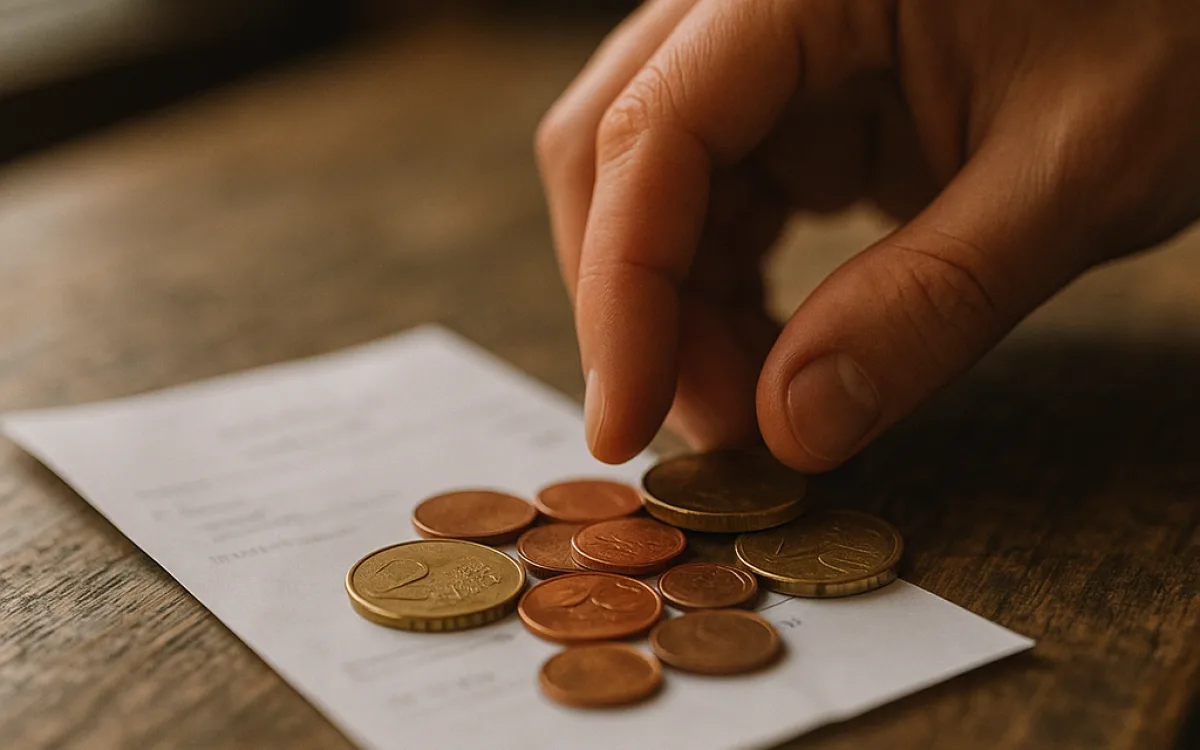
Tipping customs vary sharply from one country to the next, and a gesture meant to reward good service can become an awkward overpayment—or an unintended insult—if you rely on habit rather than local practice. This guide explains what to leave, where service is already included, and how to read a bill before you reach for your wallet.
Because few travellers want to do mental arithmetic in a foreign currency after dinner, free online calculators can split a bill, convert a percentage into a local amount, and show whether a service charge has already been added. The figures here are rules of thumb, not laws; if you are unsure, ask staff or check local guidance rather than follow a percentage blindly.
Why Tipping Customs Differ#
In some countries a tip is a thank-you for service that went beyond the basics; in others it is expected because workers are paid below a living wage and tips make up the gap. A few places treat service as part of the price of the meal, so an extra cash gesture is unnecessary or even awkward. These differences come from minimum-wage laws, tax rules, the strength of unions, and simple social convention. That is why a single percentage pulled from memory rarely fits every bill. Nothing in this article is financial, legal or tax advice; when a country’s rules affect your pay or employment, you should speak to a local expert rather than rely on a calculator.
If a bill says ‘service included’, adding a tip on top means you pay twice for the same thing.
How to Spot a Service Charge on Your Bill#
A service charge is not a tip, even when the words look similar. It is a fee added by the restaurant to the bill, and in many European countries it is legally required to be shared with staff. Before you add anything extra, look for a line that says the service is included. If you cannot read the local language, point to the total and ask, ‘Is service included?’ Staff usually understand the question. The online calculators on sitea.biz can help you work out what the charge represents, but they cannot tell you whether it has already been added; you still need to check the bill.
| Language | Common term | Meaning |
|---|---|---|
| French | service compris | service included |
| Italian | servizio incluso / coperto | service included / cover charge |
| German | Bedienung inbegriffen | service included |
| Spanish | servicio incluido | service included |
| Portuguese | serviço incluído | service included |
| English | service charge | an added fee, often shared with staff |
Tipping by Country: What to Leave#
| Country/region | Expected restaurant tip | Service usually included? |
|---|---|---|
| France | Service compris; round up to €1–€3 for good service | Yes |
| Italy | Coperto or servizio incluso; round up to €1–€2 | Yes (coperto is separate) |
| Spain | 5–10% (€2–€4 on a €40 bill) in tourist areas; less elsewhere | Sometimes in tourist zones |
| Germany | 5–10% by rounding up, roughly €2–€4 on a €40 bill | No, but rounding up is common |
| United Kingdom | 10–12.5% (€4–€5 on a €40 bill) if not added | Often added in London; check bill |
| United States | 15–20% (€6–€8 on a €40 bill) before tax | No |
| Japan | No tip; offering cash can cause offence | Yes, in the price |
| Australia | 10% (€4 on a €40 bill) only for exceptional service | Wages are factored into prices |
The euro amounts are rounded guides for a typical mid-range meal; adjust up or down for the actual bill.
Why the United States Is Different#
In the United States, federal law allows employers to pay a lower cash wage to workers who receive tips, on the assumption that tips will bring their hourly earnings up to the full minimum wage. As of recent guidance, that tipped minimum can be as low as $2.13 per hour in some states, while the federal standard minimum is $7.25 per hour. The gap is $5.12 per hour, or over $200 in a 40-hour week, which customers are expected to cover through tips. That is why a 15–20% tip is treated as part of the worker’s wage, not a bonus. The arithmetic is straightforward: Tip = bill × tip rate. On a $60 bill at 18%, the tip is $60 × 0.18 = $10.80, and the total is $60 + $10.80 = $70.80.
Some states and cities set higher minimum wages, so the exact gap varies; this is not legal or tax advice.
Use Online Calculators to Split and Check a Bill#
Once you know the local custom, the remaining job is arithmetic. A percentage calculator can turn 12.5% into an exact euro amount, and a bill-splitting calculator can divide the total—tip included—so that everyone pays the same share. Because sitea.biz calculators run entirely in your browser, nothing is uploaded and no login is required; the numbers stay on your device. The formula for an equal share is simple: share = (bill + tip) ÷ number of people. If four friends share a €92 bill and add a €10 tip, the total is €102, and each share is €102 ÷ 4 = €25.50.
- Check the bill for a service charge or coperto before deciding on a tip.
- Choose the local rate—do not assume your home country’s percentage.
- Enter the bill total into a percentage calculator to find the tip amount.
- Add the tip to the bill total, then divide by the number of people.
- Round the result to the nearest euro or note if one person paid more.
When Tipping Causes Offence#
In Japan, South Korea and parts of China, good service is seen as part of the job, not a personal favour to be rewarded with extra cash. Handing over additional money can suggest that you do not trust the employer to pay staff properly, or that you are trying to buy attention. In these places, the polite move is to say thank you, bow, or simply pay the exact amount on the bill. If you are unsure, observe what local customers do. Nothing here is a rule for every restaurant, but the safest choice is usually to follow local behaviour rather than your own habit.
- Japan: no tip; excellent service is already priced in.
- South Korea: no tip; rounding up is rare and may confuse staff.
- Mainland China: tipping is not traditional, though some high-end hotels accept it.
- Singapore: restaurants often add a 10% service charge; extra cash is uncommon.
- Taiwan: a 10% service charge is common; additional tipping is not expected.
Before You Pay: A Quick Checklist#
A few seconds of checking can save you from double-tipping or underpaying. Read the bill from the top rather than glancing at the total, because service charges and cover charges are usually listed as separate lines. If you are travelling in a group, agree on the tip before anyone pulls out a card, since splitting a tip fairly is harder once payments have been made. Remember that nothing in this guide replaces local advice; when in doubt, ask.
- Look for words like ‘service’, ‘servizio’, ‘service compris’ or ‘Bedienung’ on the bill.
- Check whether the menu stated ‘service included’ before you ordered.
- Decide whether to round up, leave coins, or add a percentage based on local custom.
- Use a calculator to convert the percentage into an exact amount in the local currency.
- Split the total, not just the food total, if the group is sharing the tip.
Common Mistakes Travellers Make#
The most expensive error is to tip twice: once through a service charge on the bill and again in cash. Another is tipping on the post-tax total when the local custom is to tip on the pre-tax food and drink. Travellers also sometimes tip in US dollars, which forces the server to exchange small notes, or leave coins that the country no longer uses. Finally, do not let embarrassment push you above what you can afford; a polite thank you and a small round-up is often enough.
- Paying a service charge and then adding a full tip on top.
- Tipping on the tax-inclusive total when locals tip on the pre-tax amount.
- Leaving foreign currency instead of local notes or coins.
- Assuming that ‘service included’ means the staff receive the full charge.
- Tipping out of guilt rather than local custom.
Frequently asked questions
Should I tip if service is already included?
If the bill clearly states that service is included, you do not need to add a separate tip unless you want to reward truly exceptional service. In France, Italy and many other countries, the menu price or bill already contains a service charge or coperto that goes toward staff wages. Adding another 10–15% on top means you are paying twice for the same thing. A small round-up or leaving the coins from your change is usually enough to show appreciation. If you are unsure, ask the server whether service is included. This is not financial or legal advice; local customs can vary between restaurants and cities.
Is it rude to tip in Japan or South Korea?
In Japan and South Korea, tipping is not part of the culture and can make staff uncomfortable. Good service is treated as a professional duty, and an extra payment can imply that you think the employer underpays workers or that you expect special treatment. The best approach is to pay the exact amount, say thank you, and leave quietly. In some tourist-oriented places, staff may accept a tip to avoid confusion, but that does not make it customary. When in doubt, watch local customers and do what they do. This is social guidance, not a legal rule, and individual businesses may differ.
How do I split a tip fairly in a group?
First add the tip to the bill total, then divide by the number of people. For example, if the bill is €84 and you agree on a 15% tip, the tip is €84 × 0.15 = €12.60, giving a total of €96.60. Split equally among four people, each share is €96.60 ÷ 4 = €24.15. A bill-splitting calculator can do this in seconds and round to the nearest euro. If one person ordered far more than the others, you may prefer to split the food individually and share only the tip. This is arithmetic, not financial advice; use it as a starting point and agree as a group.
tipping guide by countryhow much to tip in EuropeUS tipping culture explainedservice charge on restaurant billbill splitting calculatoronline calculators